In a room of just 23 people, the odds that two of them share a birthday are better than even. Most people guess you would need closer to 180. The gap between that guess and the truth is what makes this a paradox, and it is a clean little demonstration of why exponential intuition fails us.
The math
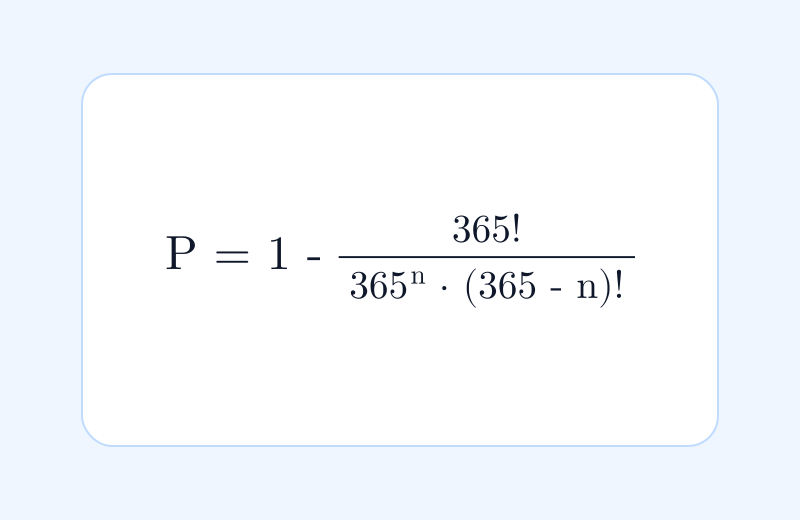
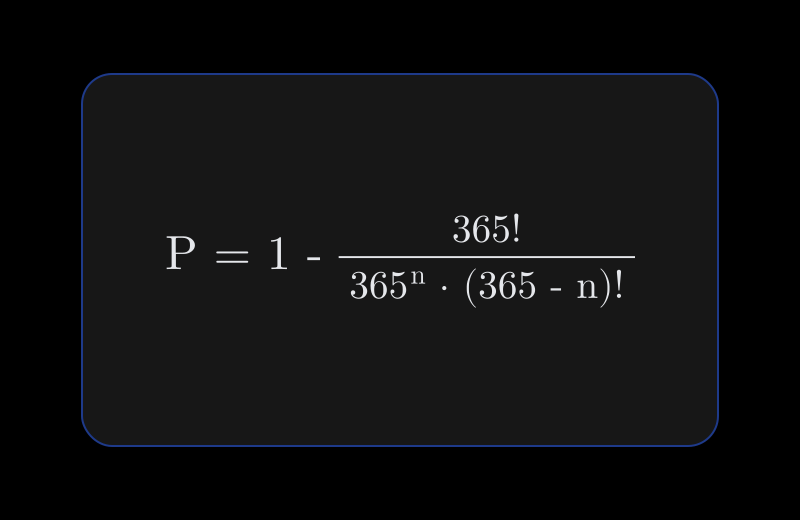
It is easier to count the chance that no one shares a birthday and subtract from
one. Lining people up one by one, each must avoid all previous birthdays, giving the chance of a match P:
The reason it climbs so fast is that the number of pairs who could match grows with the square of the group:
At 23 people that is already 253 pairs, each a separate chance to collide.
The numbers
| People | Pairs | Chance of a shared birthday |
|---|---|---|
| 10 | 45 | 12% |
| 23 | 253 | 51% |
| 30 | 435 | 71% |
| 41 | 820 | 90% |
| 57 | 1596 | 99% |
| 70 | 2415 | 99.9% |
Past about 60 people a shared birthday is all but guaranteed, yet you would need 367 people to guarantee it by the pigeonhole principle. The curve gets to near-certainty long before it gets to certainty.
Every formula and the chart above are static SVG produced at build time: no MathJax, no chart library, no JavaScript.